India has never been short of grandeur. For centuries, its courts, kingdoms and mercantile cities cultivated an extraordinary language of hospitality, expressed through architecture, craftsmanship, cuisine and ceremony. Maharajas received guests beneath painted ceilings; families preserved recipes as carefully as heirlooms; artisans devoted entire lifetimes to perfecting a single craft; and palaces were conceived not merely as residences, but as elaborate expressions of power, aesthetics and hospitality. In many ways, the foundations of luxury travel in India were established long before the modern luxury hotel ever appeared.
Yet the meaning of luxury is changing.
The traveller arriving in India today is often looking beyond the familiar symbols of opulence. A magnificent suite remains desirable, but its grandeur alone is no longer enough. The contemporary luxury traveller wants to understand the history behind the walls, to encounter a destination with intimacy rather than simply observe it, to dine where a sense of place is present in every course, and to discover experiences that could not be reproduced elsewhere. Increasingly, the greatest privilege is not what can be purchased, but what can be accessed, understood and remembered.
This evolution is creating a more sophisticated India—one where heritage and contemporary design coexist, where wilderness becomes an expression of refinement, where wellness is rooted in ancient knowledge, and where privacy, personalisation and authenticity have become the defining currencies of modern indulgence.
For Luminara Voyages, this is where the most compelling story of India begins.
When Grandeur Becomes Intimacy
There was a time when luxury travel could be recognised almost immediately. It announced itself through marble lobbies, formal dining rooms, elaborate chandeliers and impeccable white-glove service. These remain beautiful expressions of hospitality, and India continues to possess some of the world’s most remarkable examples. But the definition of luxury has gradually moved beyond spectacle.
Today, refinement is often found in what remains unseen.
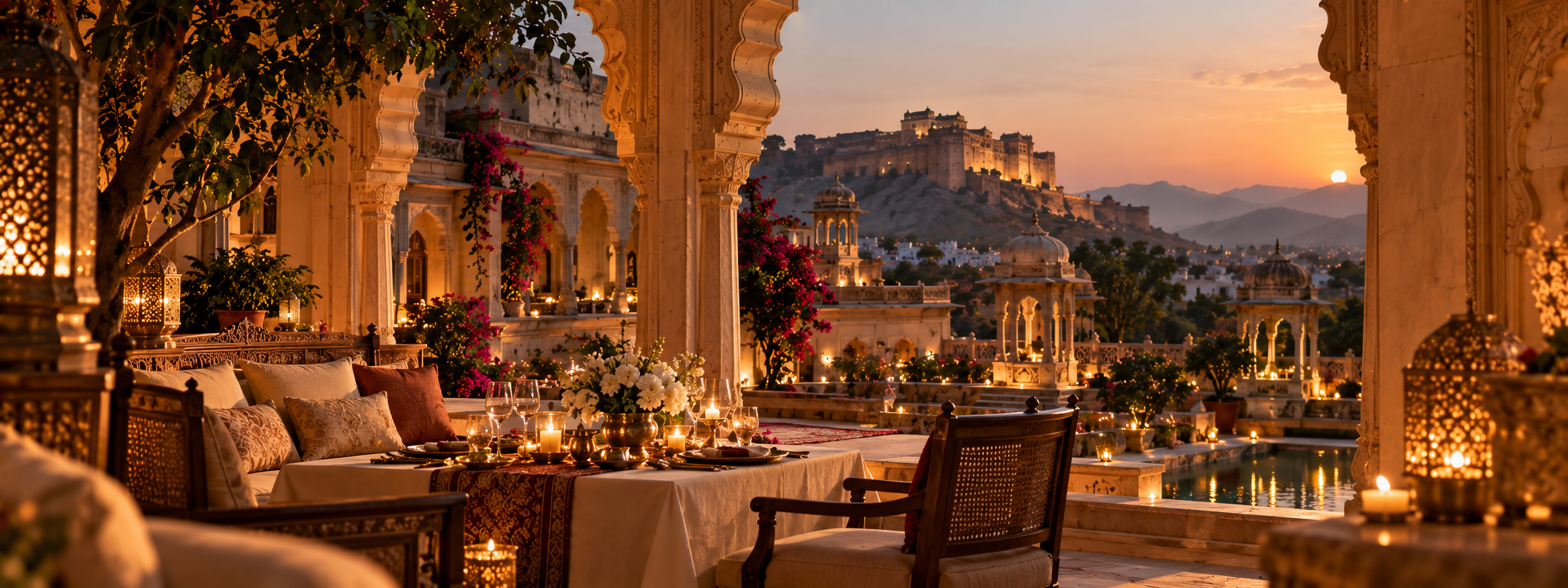
It may be the experience of waking within a restored haveli whose courtyard has remained part of a family estate for generations. It may be an evening meal prepared privately within a palace, where the menu has been inspired by recipes once served to a royal household. It may be a secluded villa overlooking the Himalayan landscape, a forest lodge positioned deep within the wilderness, or a traditional houseboat moving quietly through the backwaters of Kerala while the outside world seems to recede.
None of these experiences depend entirely upon extravagance. Their value lies in atmosphere, discretion and a sense of belonging to somewhere.
This is perhaps the most important shift taking place within Luxury Travel in India. The traveller is no longer merely purchasing a superior version of a conventional holiday. They are seeking access to a more intimate expression of the destination itself.
Luxury, in this context, becomes less conspicuous and considerably more personal.
India Was Built for This New Definition of Luxury
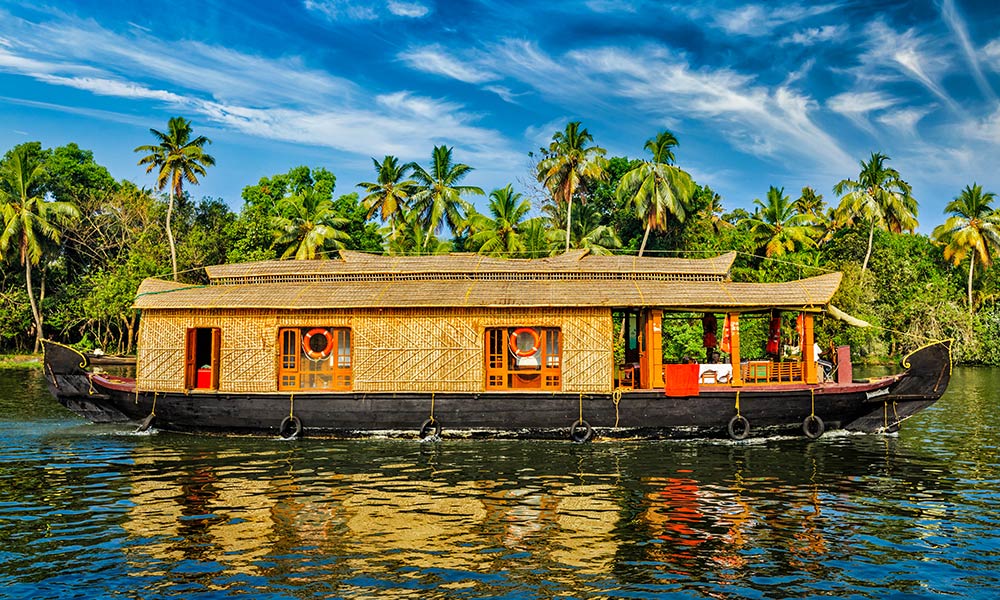
The remarkable thing about India is that this evolution does not require the country to reinvent itself. Much of what the contemporary luxury traveller seeks has existed here for centuries.
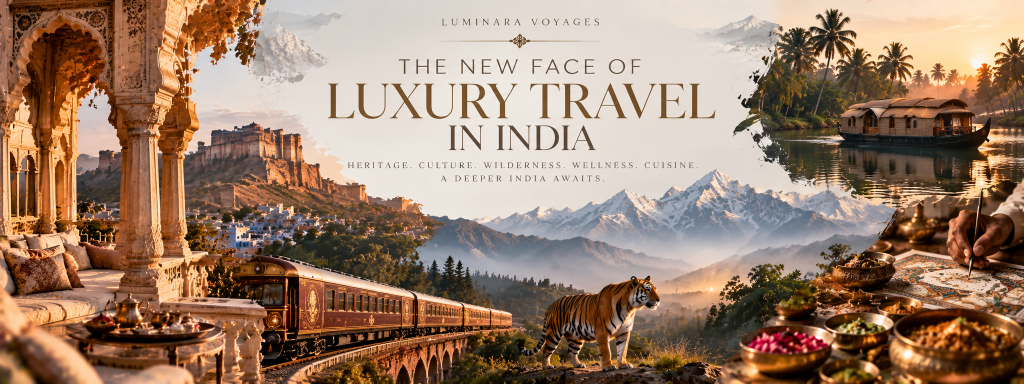
The country possesses an extraordinary geographical and cultural diversity within a single national landscape. Rajasthan carries the architectural vocabulary of royal India across its forts, palaces and desert settlements. Kashmir offers a softer world of lakes, mountains, gardens and timber craftsmanship. Kerala moves at an entirely different rhythm, shaped by waterways, tropical landscapes, Ayurveda and a cuisine deeply connected to the coast. In Madhya Pradesh and other central Indian landscapes, wilderness becomes the setting for intimate encounters with wildlife. Further east, the Northeast introduces an India of forests, indigenous cultures and landscapes that remain largely untouched by conventional tourism.
The richness is not simply visual. It is cultural.
India’s traditions were formed over centuries of exchange between communities, kingdoms, religions, trading routes and landscapes. Its architecture carries traces of different civilisations. Its kitchens preserve regional histories. Its textiles reveal the geography and imagination of the people who created them. Its festivals, music, craftsmanship and rituals continue to provide an extraordinary depth of context to those willing to travel beyond the surface.
For the modern traveller, this creates something increasingly valuable: depth without artificiality.
The luxury is already there. The art lies in knowing how to reveal it.
From Five-Star Hospitality to Private Worlds
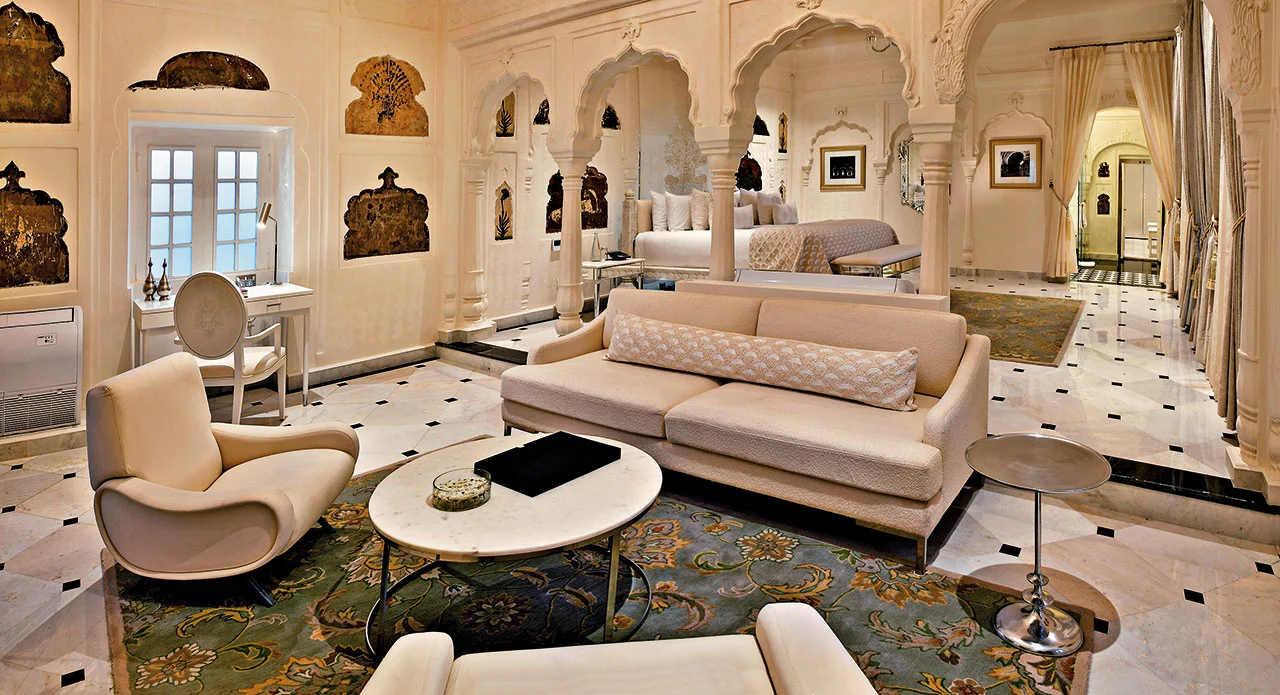
The finest hotels will always have their place in the story of Indian luxury. Yet the most interesting developments are taking place around the idea of personal space.
A private residence within a palace. A villa surrounded by wilderness. A secluded tent overlooking the desert. A heritage haveli tucked behind the streets of an old city. A houseboat that becomes both accommodation and passage through a landscape. A mountain retreat where the horizon becomes the principal feature of the room.
These spaces offer something that conventional luxury cannot always provide: a feeling of separation.
For travellers accustomed to sophisticated hotels around the world, exclusivity is no longer necessarily defined by the size of a suite or the number of facilities available. It can be found in the ability to close a door and feel that the destination belongs entirely to you for a while.
This is particularly powerful in India, where architecture and landscape can become inseparable from hospitality. A restored palace does not simply provide a room; it places the traveller inside a piece of history. A forest lodge does not merely offer accommodation; it changes the rhythm of the day according to the movements of the wilderness. A private villa in the hills can make the landscape itself feel like part of the property.
The distinction is subtle but significant.
The hotel is no longer merely where the traveller sleeps.
It becomes part of the story they have travelled to experience.
The Rise of Experiential Luxury
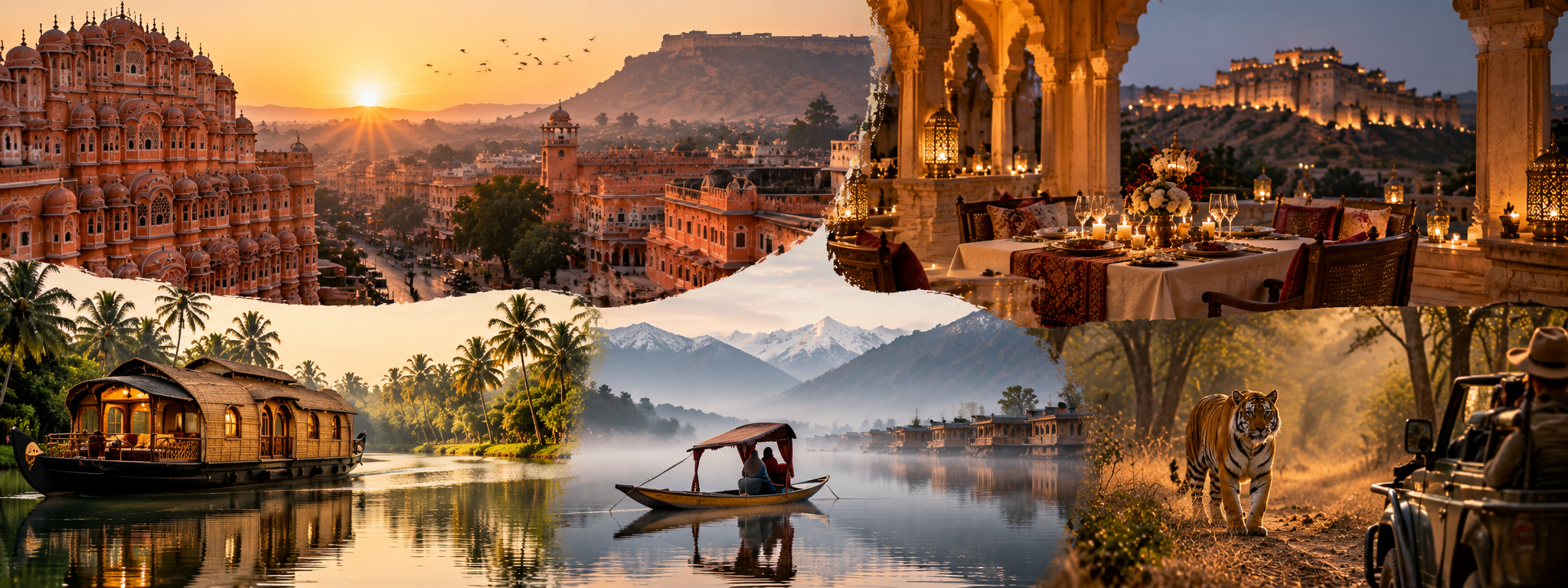
Perhaps nowhere is this transformation more visible than in the growing importance of experiences.
A destination is remembered differently when it has been encountered rather than simply visited.
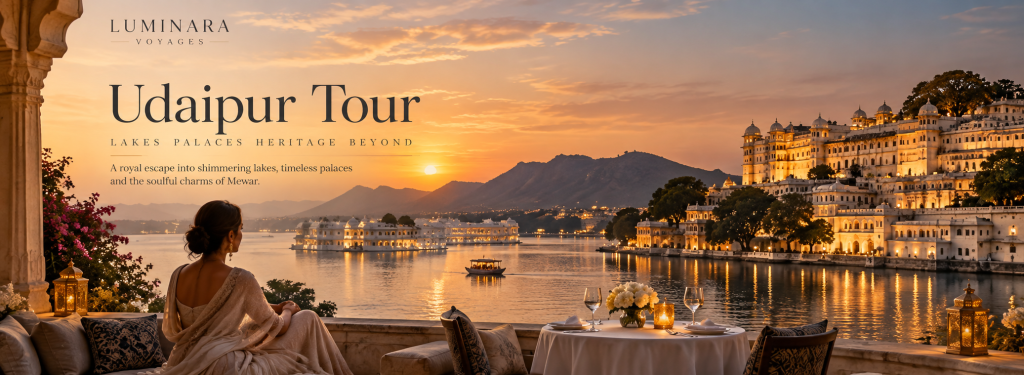
Consider Jaipur in the early morning, before the Pink City has fully awakened, when the first light settles across its sandstone facades and the architecture begins to reveal the precision of the city conceived by Sawai Jai Singh II. Consider a private evening within a Rajasthani palace, where dinner unfolds beneath an open sky and the atmosphere carries more history than decoration could ever provide.
In Kerala, the experience might begin on water rather than land, moving slowly through the backwaters as villages, coconut groves and waterways pass without hurry. In Kashmir, it could be the stillness of a shikara crossing Dal Lake at first light, with the mountains appearing gradually through the morning mist. In Ranthambore, the luxury lies not in knowing whether the tiger will appear, but in having the time, expertise and patience to wait for the forest to reveal itself.
These moments resist standardisation.
They cannot be reduced to a checklist.
And that is precisely what gives them value.
The most sophisticated Luxury Travel in India is increasingly built around experiences that create emotional memory rather than simply photographic evidence. The traveller returns with stories that begin with a place but ultimately become personal.
The New Indian Luxury Traveller
The evolution of luxury is also being driven by the traveller themselves.
Today’s discerning guest may have travelled extensively across Europe, Southeast Asia, Africa and the Middle East. They may already know what exceptional hospitality feels like. They are therefore less interested in conventional indicators of prestige and more interested in what makes a destination genuinely distinctive.
They want comfort, certainly, but they also want context.
They want authenticity without compromising on service, adventure without unnecessary discomfort, cultural immersion without surrendering privacy, and wellness without turning the entire journey into a programme of treatments.
Most importantly, they want choice.
A thoughtfully designed luxury itinerary should never feel like a timetable that the traveller has been asked to obey. It should have the flexibility to accommodate curiosity, spontaneity and individual preference.
Perhaps a morning originally intended for sightseeing becomes an afternoon spent inside a private art collection. Perhaps a planned restaurant reservation gives way to an intimate dinner within the hotel. Perhaps the traveller discovers an artisan whose work deserves more time than the itinerary originally allowed.
True personalisation leaves room for these moments.
The itinerary should support the journey—not control it.
Heritage, Reimagined for a New Generation
India’s relationship with heritage is entering an especially fascinating chapter.
Across Rajasthan and beyond, historic palaces, havelis and estates are being preserved and reimagined as contemporary hospitality spaces. Their transformation is not simply an exercise in restoration. At its best, it is a dialogue between two eras.
The architectural language remains recognisably Indian: courtyards, jharokhas, carved stone, frescoes, gardens and ceremonial spaces. Yet the experience surrounding them has evolved to meet contemporary expectations of comfort, discretion and service.
This balance is important.
A palace should not feel like a museum in which the guest happens to sleep. Nor should restoration erase the qualities that made the building significant in the first place.
The most successful heritage properties understand this distinction. They allow the past to remain visible while making the present exceptionally comfortable.
A carved doorway retains its imperfections. An old courtyard continues to frame the sky. A historic dining room carries the atmosphere of another era, even as the cuisine becomes more contemporary.
The traveller is not merely staying in a beautiful building.
They are temporarily inhabiting its history.
Beyond the Palace: India’s Wilderness of Luxury
For generations, India’s luxury narrative was closely associated with royalty.
Today, some of its most compelling expressions are found far away from palace walls.
They exist in the silence of the forest, the vastness of the desert, the stillness of the mountains and the changing colours of the coast.
A luxury safari in India is not defined simply by the quality of the lodge. Its real value lies in proximity to wilderness without sacrificing comfort. The day begins before sunrise, the landscape changes with every kilometre, and an experienced naturalist reads details in the forest that an untrained eye would overlook.
In the Himalayas, luxury may take an entirely different form. It can mean privacy, clean air, exceptional architecture and the rare privilege of uninterrupted views across a landscape that makes urban life feel impossibly distant.
In the Thar Desert, it can be the silence that arrives after sunset, when the last traces of daylight disappear and the scale of the landscape becomes almost impossible to comprehend.
India’s wilderness offers a reminder that luxury does not always need to be manufactured.
Sometimes, the destination itself is the greatest amenity.
Wellness Rooted in Place
The global wellness movement has given new attention to something India has understood for thousands of years: restoration requires more than indulgence.
Ayurveda, yoga, meditation and traditional wellness practices have long formed part of India’s cultural landscape. What is changing is the way these traditions are being incorporated into contemporary travel.
The modern wellness traveller may no longer be looking for an afternoon treatment followed by a conventional holiday. Instead, they may seek an environment in which the entire rhythm of the journey becomes restorative.
In Kerala, this can mean combining Ayurvedic traditions with tropical landscapes, carefully considered cuisine and an unhurried daily rhythm. In the Himalayas, wellness may be expressed through silence, nature and distance from the noise of ordinary life. In Rajasthan, a secluded heritage retreat can provide an entirely different interpretation of restoration—one shaped by space, architecture and the slower rhythm of desert living.
The emerging philosophy is not simply about feeling pampered.
It is about returning home renewed.
That distinction is likely to become increasingly important as affluent travellers begin to value energy, wellbeing and time as highly as material comfort.
The Table as a Gateway to India
To travel through India without understanding its food would be to experience only part of the country.
Cuisine here is geography made edible.
The arid landscapes of Rajasthan produced traditions shaped by preservation and resourcefulness. Kerala’s coastal position created a cuisine deeply influenced by spices, seafood and centuries of maritime exchange. Kashmir developed an elaborate culinary culture of its own, while Lucknow transformed courtly dining into one of India’s most refined gastronomic traditions.
For the modern luxury traveller, food is increasingly becoming a reason to travel rather than simply an element of travel.
The finest culinary experiences may take place in a celebrated restaurant, but they can be equally memorable within a private residence, an old haveli kitchen, a carefully curated market visit or a dining experience designed around regional traditions.
The most meaningful meal is often the one that explains its surroundings.
A dish becomes more memorable when its ingredients have a landscape, its recipe has a history and the person serving it has a story.
This is where Indian cuisine becomes particularly powerful within luxury travel: it does not merely feed the traveller.
It introduces them to a culture.
The Quiet Return of Slow Travel
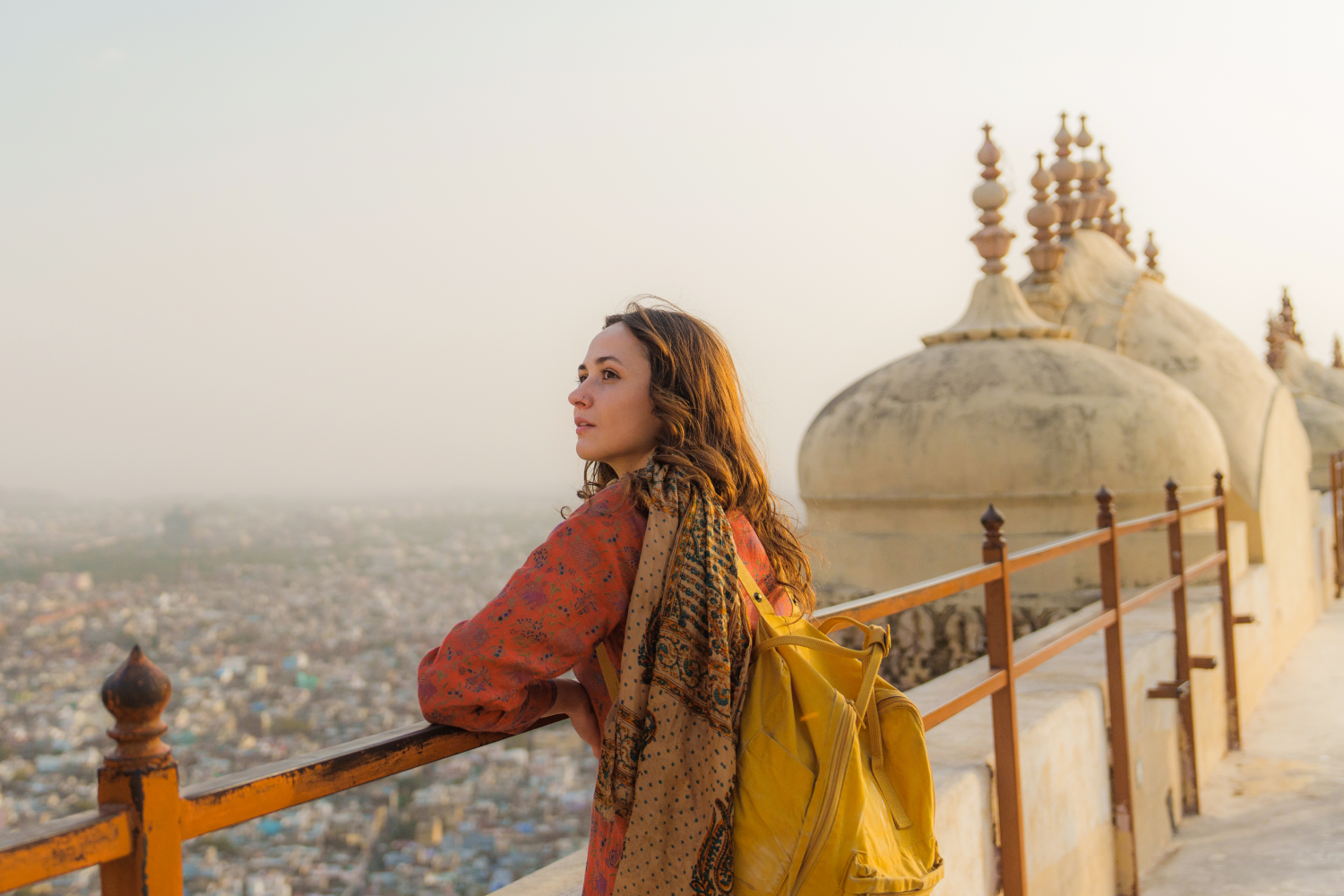
There is another transformation taking place, perhaps less visible but equally significant.
Travellers are beginning to value time differently.
The traditional luxury itinerary often attempted to maximise every day: another monument, another city, another restaurant, another transfer.
But there is a growing appreciation for staying longer and experiencing fewer places with greater depth.
A palace deserves an afternoon.
A city deserves an evening without an agenda.
A wildlife destination deserves patience.
A mountain retreat deserves silence.
A houseboat journey deserves the freedom to move slowly enough for the landscape to become familiar.
Slow travel is not an argument against discovery. It is an argument for attention.
When the traveller is no longer concerned with how many destinations can be completed, they begin to notice the details that make one destination different from another.
The light falling across an old courtyard.
The scent of spices in a morning market.
The sound of water against a wooden boat.
The quiet conversation after a long dinner.
The sudden appearance of wildlife beyond the trees.
These are the moments that remain long after an itinerary has been forgotten.
Privacy as the Ultimate Indulgence
Luxury has historically been associated with visibility. The prestigious address, the celebrated restaurant and the recognisable hotel were all symbols of status.
The contemporary luxury traveller is increasingly interested in something less visible.
Privacy.
A villa without neighbouring rooms.
A private guide who understands when conversation is welcome and when silence is preferable.
A palace courtyard reserved for a single dinner.
A wilderness lodge where the nearest distraction is the landscape itself.
A journey designed without unnecessary transfers, crowds or commercial interruptions.
Privacy is valuable because it protects something that modern life has made increasingly scarce: attention.
It creates room for the traveller to experience a destination without constantly sharing it with the outside world.
And perhaps that is why the most sophisticated luxury experiences increasingly feel understated.
They do not need to prove that they are exclusive.
Their exclusivity is felt.
Access, Intimacy and the Private Experience
The next generation of luxury travel will increasingly be defined by access.
Not access in the superficial sense of entering somewhere exclusive, but access to knowledge, people, places and perspectives that are otherwise difficult to encounter.
A private conversation with a master artisan can reveal more about a city than an afternoon spent walking through a souvenir market. A knowledgeable naturalist can transform a safari from a search for wildlife into an education in ecology. A historian can make the architecture of a palace feel alive. A chef can turn a meal into a passage through generations of family memory.
These experiences carry an intangible quality.
They make the traveller feel connected rather than entertained.
For Luminara Voyages, this distinction sits at the heart of meaningful Luxury Travel in India. The objective is not simply to secure access because it is exclusive. It is to understand why that access matters and how it can deepen the traveller’s relationship with the destination.
A More Conscious Definition of Luxury
Luxury travel cannot remain detached from the places that make it possible.
As travellers become more conscious of conservation, local communities, architecture and environmental responsibility, the definition of indulgence is changing once again.
The most thoughtful properties are increasingly drawing upon local materials, regional cuisine, traditional craftsmanship and conservation initiatives. In the wilderness, hospitality can become a means of protecting the landscape. In heritage destinations, tourism can provide the resources required to preserve historic architecture. In artisan communities, meaningful engagement can help traditional crafts remain commercially viable for another generation.
This does not diminish luxury.
It makes it more intelligent.
A beautiful property becomes more compelling when its existence contributes to the preservation of the landscape around it. A culinary experience becomes more meaningful when it supports local producers. A heritage stay becomes more valuable when the architecture is maintained rather than merely imitated.
The future of luxury will not necessarily be less indulgent.
It will simply become more considered.
Beyond India’s Familiar Icons
India’s established luxury destinations remain extraordinary. Delhi, Agra, Jaipur, Udaipur, Mumbai, Goa and Kerala will continue to draw travellers for very good reason.
But a new map is beginning to emerge.
It extends towards lesser-known Himalayan valleys, the landscapes of the Northeast, forgotten heritage towns, remote coastal communities and wildlife regions where the experience remains more intimate than conventional tourism.
For the experienced traveller, this is perhaps the most exciting development of all.
Once the celebrated landmarks have been seen, the question changes from “What should I visit?” to “What have I not yet discovered?”
That question opens a far richer India.
One where the reward lies not in recognition, but in discovery.
The Future of Luxury Travel in India
The future will not be defined simply by more luxurious hotels, more elaborate suites or increasingly elaborate forms of service. Those will continue to evolve, but they are only the visible layer of a much deeper transformation.
The real opportunity lies in creating journeys that understand the individual traveler.
A history enthusiast should encounter India differently from a wildlife devotee. A couple seeking solitude should not receive the same rhythm as a family discovering the country together. A returning traveler who has already experienced the famous landmarks should be introduced to another India altogether.
This is where the role of a luxury travel curator becomes important.
The value is not simply in knowing where to go.
It is in knowing why a particular place, property, experience or moment belongs in a particular journey.
That requires judgement.
It requires local understanding.
It requires attention to detail.
And above all, it requires listening.
Where Luminara Voyages Sees India Going
At Luminara Voyages, we believe India’s next chapter in luxury travel will be defined by depth rather than display.
The palace will remain magnificent. The heritage hotel will continue to enchant. The finest resorts will continue to refine the art of hospitality. But around these familiar symbols, travellers are beginning to seek something more personal: meaningful encounters, private access, extraordinary landscapes, culinary discovery, wellness, craftsmanship and the freedom to experience a destination at their own pace.
Our role is to bring these elements together with discretion.
We do not believe a luxury itinerary should simply contain more.
It should contain more meaning.
The right hotel should complement the destination. The right experience should reveal something about it. The right pace should leave room for discovery. And every detail should feel as though it belongs to the traveller rather than having been taken from a standard itinerary.
That is the philosophy behind the Luminara approach.
Not travel designed around what is easiest to sell, but journeys designed around what is worth remembering.
The India That Awaits
India’s new luxury story is not a departure from its heritage.
It is its continuation.
The palaces remain. The craftsmen remain. The kitchens remain. The mountains, forests, deserts and waterways remain. What has changed is the way discerning travellers are beginning to experience them.
They are travelling more deliberately.
Staying longer.
Looking deeper.
Seeking privacy rather than spectacle.
Choosing authenticity without compromising comfort.
And valuing experiences that carry meaning long after the journey has ended.
Perhaps this is the most exciting moment for Luxury Travel in India.
The country no longer needs to choose between heritage and modernity, grandeur and intimacy, comfort and authenticity. It can offer all of them simultaneously—provided the journey is designed with enough intelligence to allow each element to reveal itself.
The future of Indian luxury will therefore not belong solely to the grandest palace or the newest resort.
It will belong to the journey that makes a traveller feel that, for a brief and unforgettable period, they have been given access to an India that most people never see.
And that is the India Luminara Voyages seeks to curate.
Not simply the India that has been photographed, but the India that deserves to be discovered.