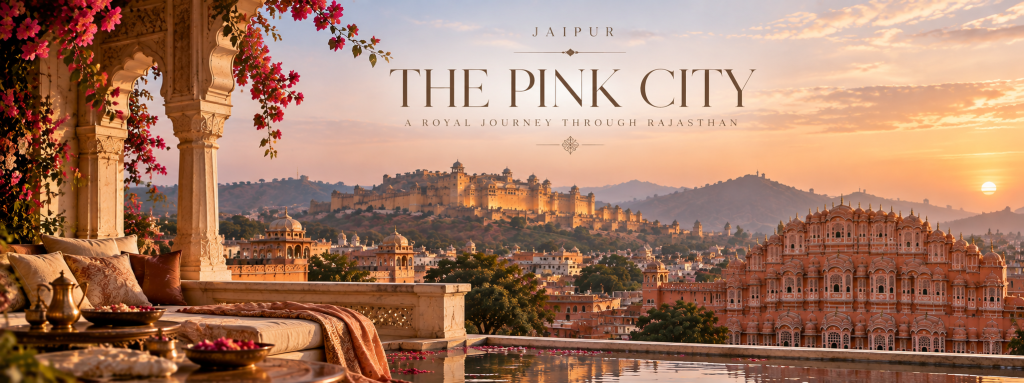
There are cities that reveal themselves through monuments. And then there is Jaipur—a city that reveals itself through atmosphere.
At first light, the old city takes on the softest shade of rose. The silhouettes of palaces emerge behind ornate facades, temple bells drift through narrow streets, and the first movement of the morning begins beneath the carved balconies of a city built for royalty.
Jaipur is not simply the capital of Rajasthan. It is a living expression of the imagination of the Rajput court—a city where architecture was designed with purpose, where craftsmanship became inheritance, and where centuries of royal tradition continue to shape everyday life.
A Jaipur Tour with Luminara Voyages is designed to experience this character beyond the obvious. It is a journey through grand palaces and ancient forts, intimate courtyards and artisan workshops, exquisite cuisine and extraordinary hospitality.
Here, history does not sit behind glass.
It lives in the stone.
It moves through the bazaars.
It waits beneath the arches of a palace courtyard.
And sometimes, it appears in the quietest moment of an evening when the Pink City begins to glow.
The Spirit of the Pink City
Jaipur was founded in 1727 by Maharaja Sawai Jai Singh II, a ruler whose vision extended far beyond the traditions of his time.
He imagined a city built according to principles of architecture, mathematics and astronomy—a carefully planned urban centre divided into broad avenues and orderly quarters.
The result was remarkable.
Today, the historic heart of Jaipur remains one of India’s most recognisable urban landscapes. Its rose-toned buildings, elaborate gateways and geometric streets create a visual identity unlike anywhere else in the country.
Yet Jaipur’s beauty is not limited to its architecture.
It lies in the contrast.
A centuries-old palace stands beside a contemporary restaurant. A jeweller continues a craft passed through generations. A quiet courtyard hides behind an unassuming doorway. A ceremonial tradition survives in a city that has steadily embraced the modern world.
This is what makes Jaipur compelling.
It is royal without being frozen in time.
A City Written in Stone
The Grandeur of Amber Fort
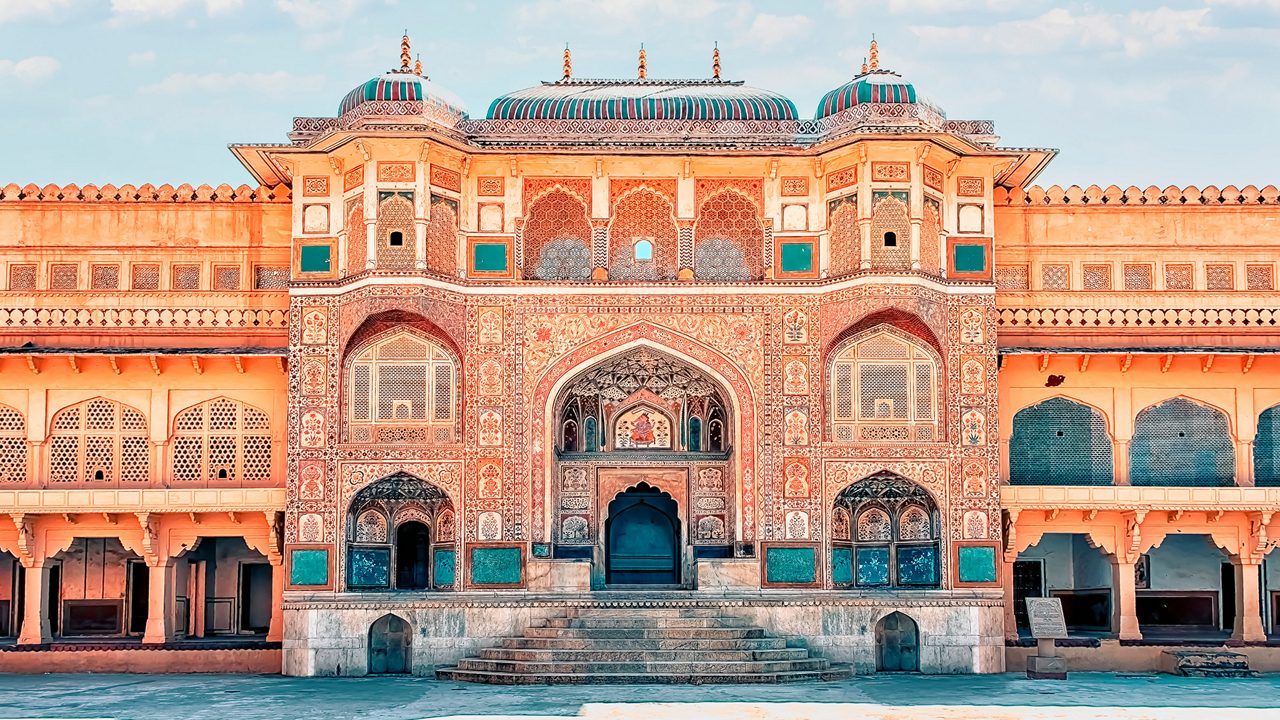
High above the ancient landscape of Jaipur, Amber Fort rises from the rugged Aravalli hills with the authority of a royal citadel.
Its sandstone and marble walls appear almost inseparable from the mountains themselves.
Inside, the fort unfolds through a sequence of courtyards, gateways and private chambers. Elaborate mirror work catches the light. Delicate marble details reveal the extraordinary craftsmanship of another era. Windows open towards the surrounding hills, offering views that explain why this landscape became the setting for generations of Rajput royalty.
The experience is not merely architectural.
It is cinematic.
Arriving early allows the fort to be experienced in relative stillness, before the day becomes animated. The morning light moves slowly across the stone, revealing details that can easily disappear beneath the intensity of the afternoon sun.
For a discerning traveller, Amber is best approached not as a monument to be photographed, but as a place to pause and imagine the world that once existed within its walls.
City Palace — The Heart of Royal Jaipur
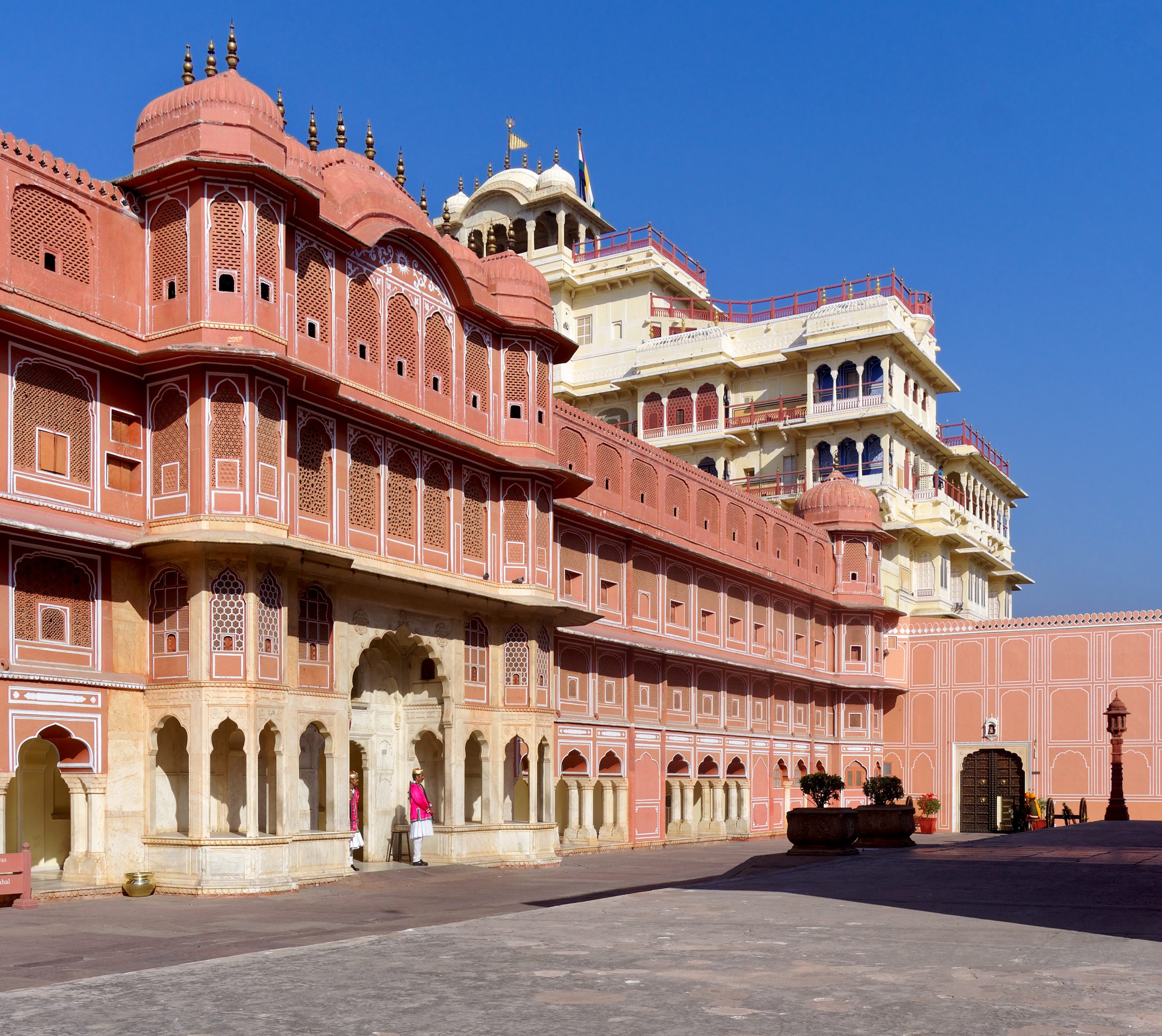
Within the old city stands the City Palace, a remarkable complex where courtyards, gateways, museums and royal residences come together.
Its architecture reflects the many influences that shaped Jaipur—Rajput grandeur alongside Mughal and European elements, brought together with an elegance that feels distinctly Rajasthani.
The palace is filled with details that reward a slower pace.
Painted doorways.
Carved stone.
Intricate textiles.
Ceremonial objects.
Royal manuscripts.
And courtyards where the scale of the complex gradually reveals itself.
The famous Peacock Gate is among Jaipur’s most recognisable architectural details, its intricate ornamentation transforming a simple passageway into something closer to jewellery in architectural form.
City Palace offers a glimpse into the ceremonial world of Jaipur’s former rulers while remaining deeply connected to the city’s living royal heritage.
Hawa Mahal — The Palace of a Thousand Windows
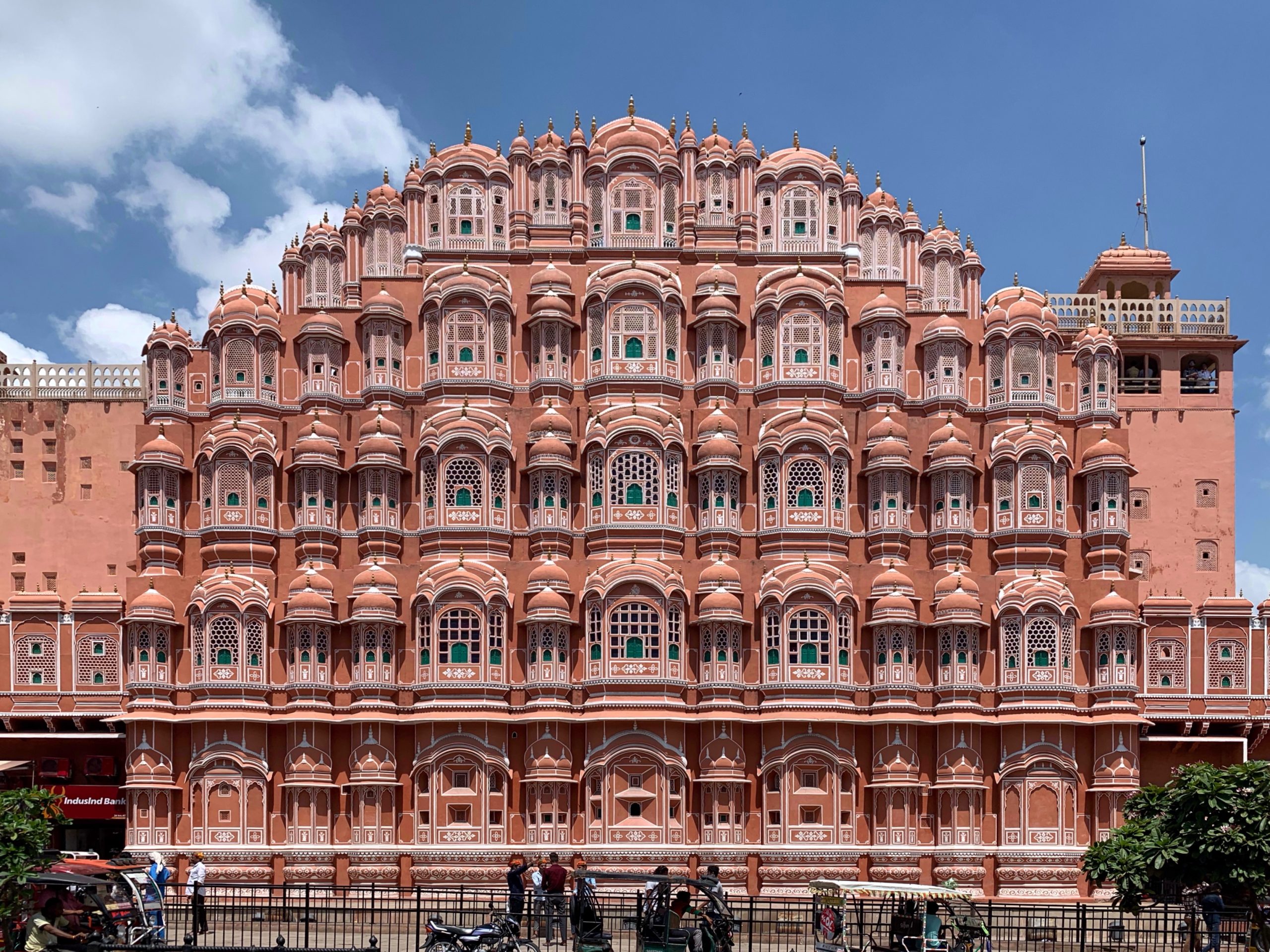
Few images are more closely associated with Jaipur than the delicate façade of Hawa Mahal.
Its honeycomb-like structure rises above the street in a composition of hundreds of small windows and intricately carved screens.
Built in 1799, the palace allowed royal women to observe life and ceremonial processions on the streets below while remaining largely unseen.
Seen from the outside, Hawa Mahal appears almost weightless.
But its elegance becomes more apparent when viewed as part of the surrounding old city.
The streets below continue to move with the same energy that has defined this part of Jaipur for generations. Shopfronts open. Traders arrange their displays. Rickshaws pass beneath the historic facades.
Above it all, Hawa Mahal remains quietly magnificent.
Jal Mahal — A Palace Suspended in Water
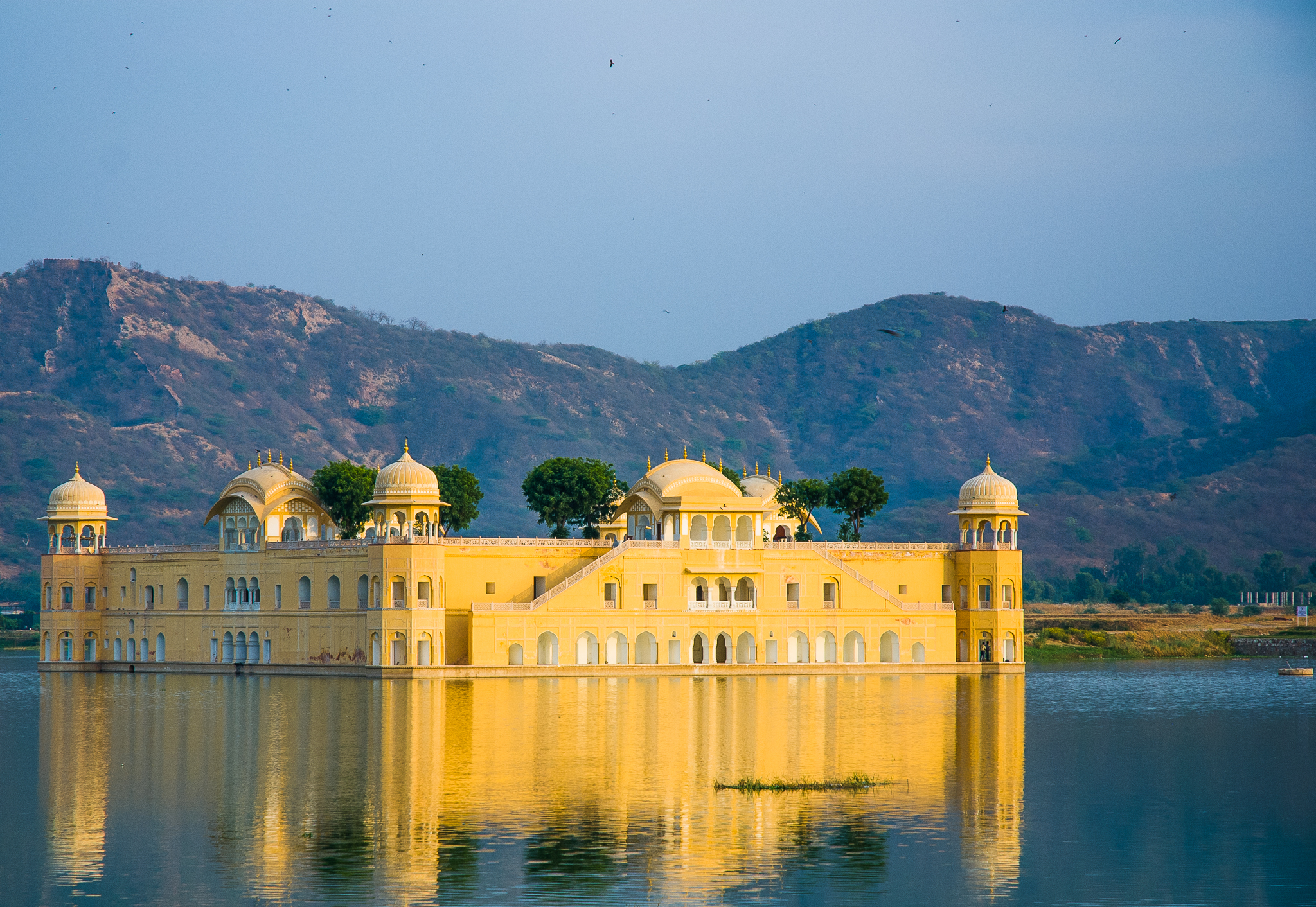
As evening approaches, the landscape changes.
On the waters of Man Sagar Lake, Jal Mahal appears to float between earth and sky.
Only part of the palace is visible above the waterline, creating an almost dreamlike impression. The surrounding hills frame the scene while the changing light transforms the sandstone from warm gold to deeper amber.
Jal Mahal is best appreciated from the lakeside rather than rushed through as a conventional sightseeing stop.
It is a moment for stillness.
A pause between the energy of the old city and the grandeur of Jaipur’s forts.
Jaigarh Fort — Where the Hills Hold Their Secrets
Above Amber, Jaigarh Fort stretches across the Aravalli landscape with a more formidable character.
Built as a military stronghold, the fort offers sweeping views over the surrounding hills and the historic settlements below.
Its walls, gateways and watchtowers reveal a different side of Jaipur—less ceremonial, more strategic.
The fort is also associated with Jaivana, one of the world’s notable historic wheeled cannons.
But beyond its military history, Jaigarh’s greatest luxury is its sense of perspective.
Standing upon the fortifications, Jaipur feels distant.
The city becomes a landscape rather than a destination, and the Aravalli hills appear to stretch endlessly beyond it.
Nahargarh Fort — Jaipur From Above
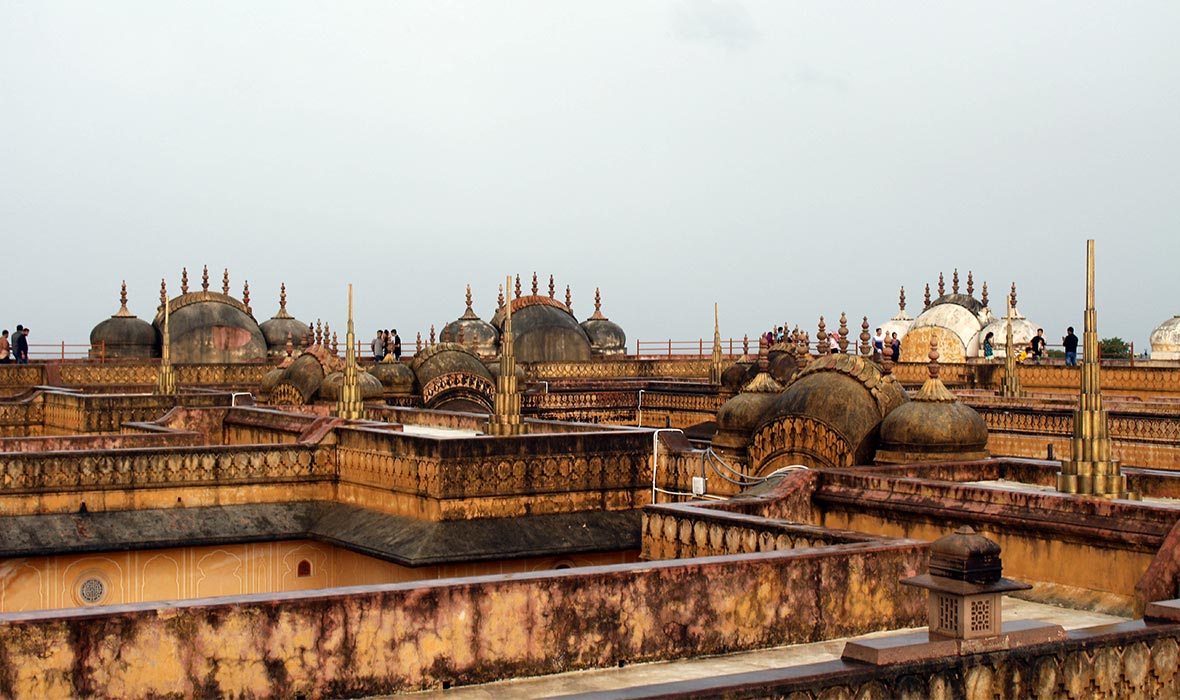
If Jaipur has a place for contemplation, it may be Nahargarh.
Perched along the Aravalli hills, the fort overlooks the entire city.
During the day, the view extends across Jaipur’s carefully planned streets. As the sun begins to descend, the city’s colours deepen.
And after dark, the Pink City becomes a constellation of lights.
Nahargarh is especially beautiful towards sunset, when the architecture and landscape become silhouettes against the changing sky.
It is Jaipur at its most expansive.
Beyond the Palaces
The Old City — Where Jaipur Becomes Personal
The grand monuments tell one story of Jaipur.
The old streets tell another.
Within the historic city, everyday life unfolds beneath the same architectural language that shaped Jaipur centuries ago.
Markets fill with textiles, gemstones, handicrafts and traditional Rajasthani products. Artisans continue techniques passed through generations. Shops reveal fabrics in colours that seem almost impossible beneath the desert sun.
Johari Bazaar carries Jaipur’s long association with jewellery and gemstones.
Bapu Bazaar introduces visitors to textiles, leatherwork, handicrafts and the colourful character of Rajasthan.
Tripolia Bazaar carries a more traditional atmosphere, with artisans and merchants contributing to the city’s enduring commercial identity.
These are not merely shopping destinations.
They are part of Jaipur’s cultural fabric.
The most rewarding approach is to wander without hurry, allowing the city to reveal itself between the grand landmarks.
The Craftsmanship of Jaipur
A City Where Beauty Becomes Craft
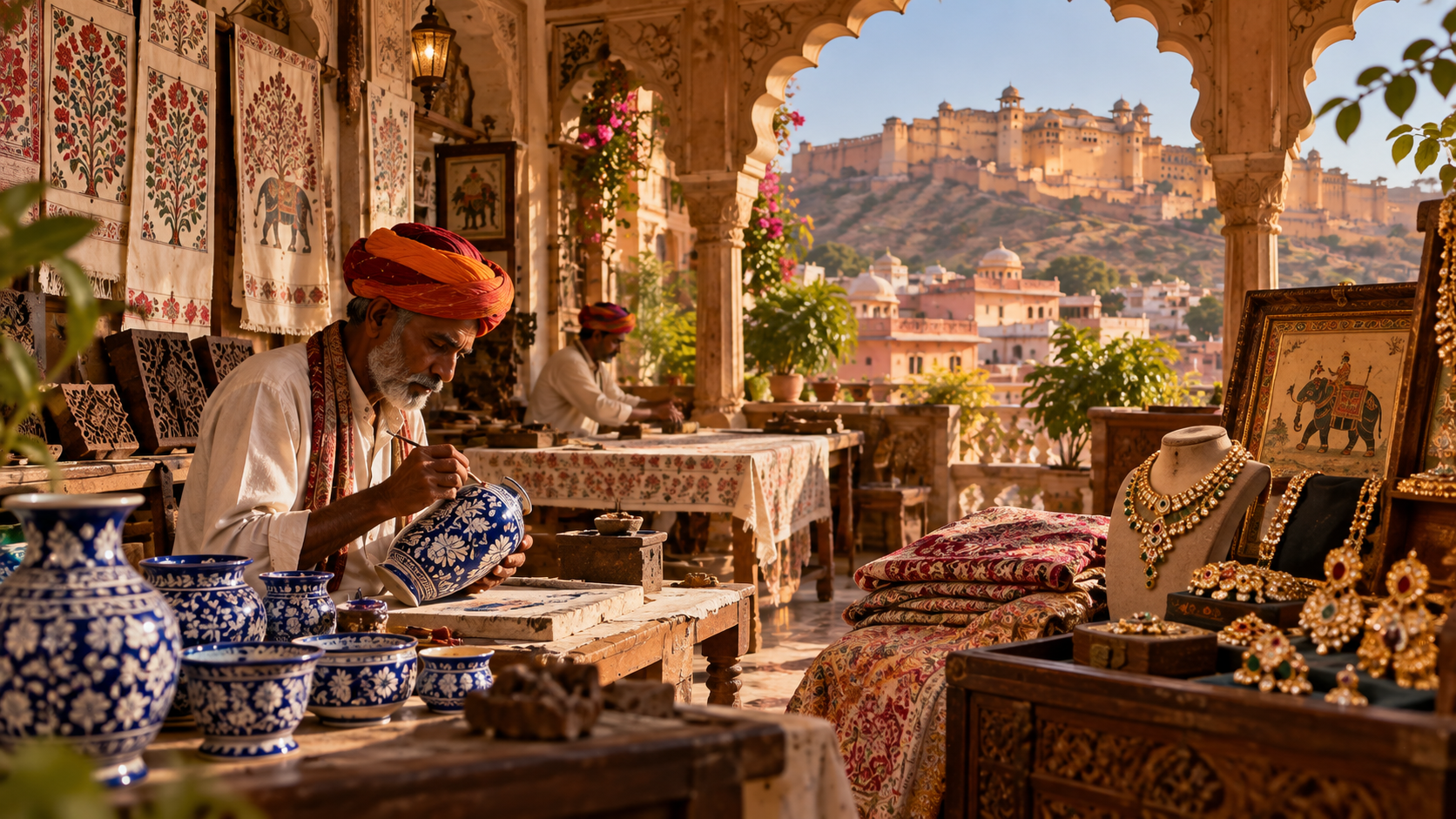
Jaipur’s relationship with craftsmanship is profound.
Blue pottery, block printing, jewellery, miniature painting, textiles and traditional decorative arts have become part of the city’s cultural identity.
For travellers interested in understanding Rajasthan beyond its monuments, meeting artisans can offer an entirely different perspective.
A piece of jewellery begins with an idea.
A textile emerges from a repeated rhythm of hands.
A block-printing pattern develops through precision and patience.
A miniature painting is built from layers of extraordinary detail.
These experiences transform Jaipur from somewhere you see into somewhere you understand.
Luminara Voyages can curate private encounters around these traditions, allowing the traveller to experience the artistry behind the objects rather than simply purchasing the finished piece.
Jaipur After Sunset
When the Pink City Turns Golden
Jaipur changes after dark.
The heat softens. The streets become more atmospheric. Historic facades glow beneath warm illumination, while rooftops begin to reveal views across the city.
This is the hour for a different kind of Jaipur.
A private dinner in an elegant heritage setting.
An intimate evening surrounded by palace architecture.
A rooftop table overlooking the old city.
A slow walk through beautifully illuminated heritage quarters.
Or simply an unhurried evening in the privacy of a palace courtyard.
Luxury in Jaipur does not always announce itself.
Sometimes it is found in the space between two moments.
The Art of Staying
Jaipur’s Palaces Reimagined
The finest way to experience Jaipur is to allow its royal character to continue beyond the day’s discoveries.
The city is home to extraordinary properties where heritage architecture, refined service and contemporary comfort come together.
Rambagh Palace
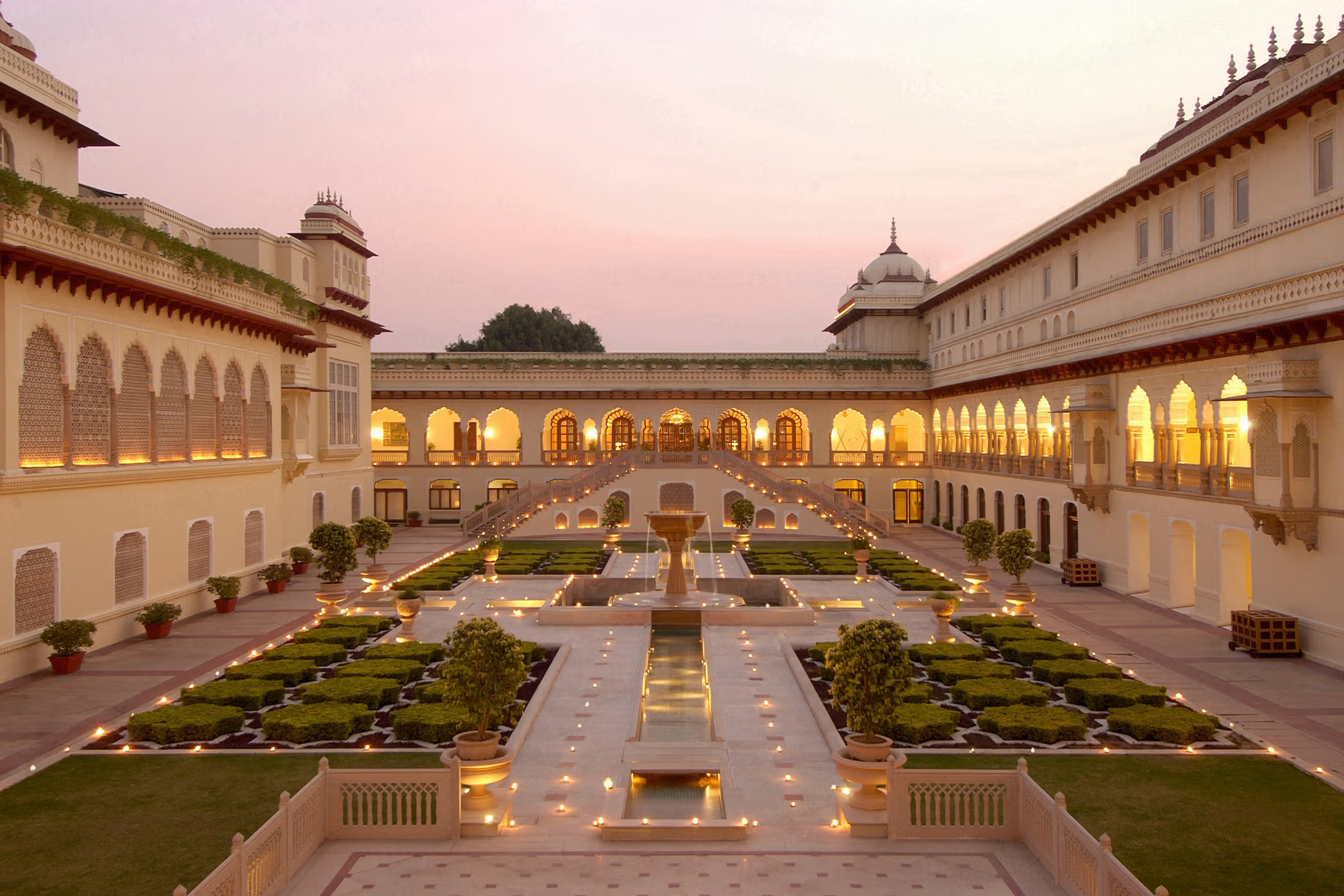
Once the residence of Jaipur’s Maharaja, Rambagh Palace carries an unmistakable sense of royal grandeur.
Its gardens, marble corridors, ornate interiors and ceremonial spaces create an atmosphere that feels deeply connected to Jaipur’s history.
Staying here is less about accommodation and more about inhabiting a piece of the city’s royal story.
The Oberoi Rajvilas
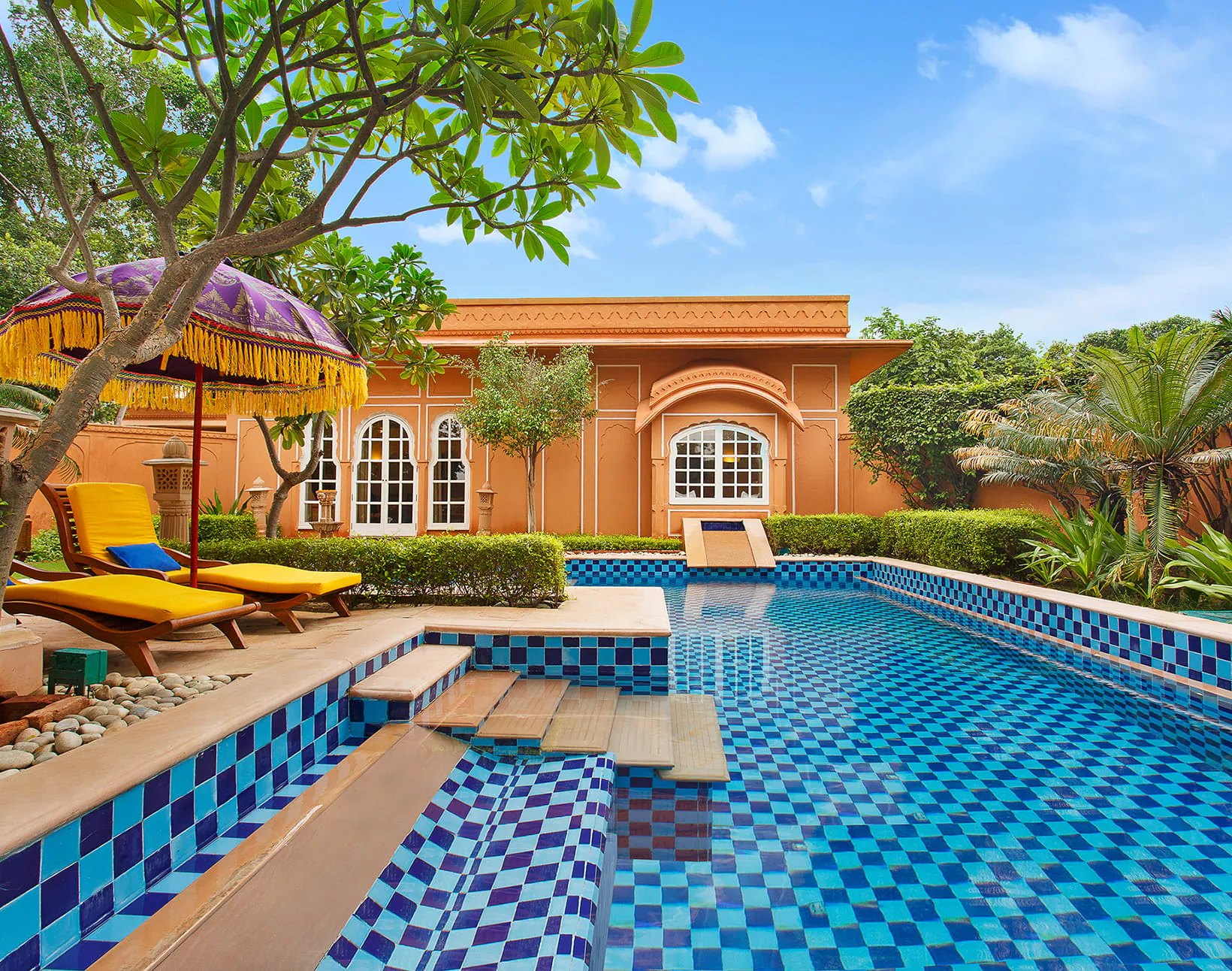
Set within expansive landscaped grounds, The Oberoi Rajvilas offers a different interpretation of Rajasthan.
Its architecture draws from the region’s traditional forms while the experience is defined by privacy, space and exceptional hospitality.
The property feels removed from the movement of the city—a sanctuary where Jaipur’s landscape becomes part of the stay.
Suján Rajmahal Palace
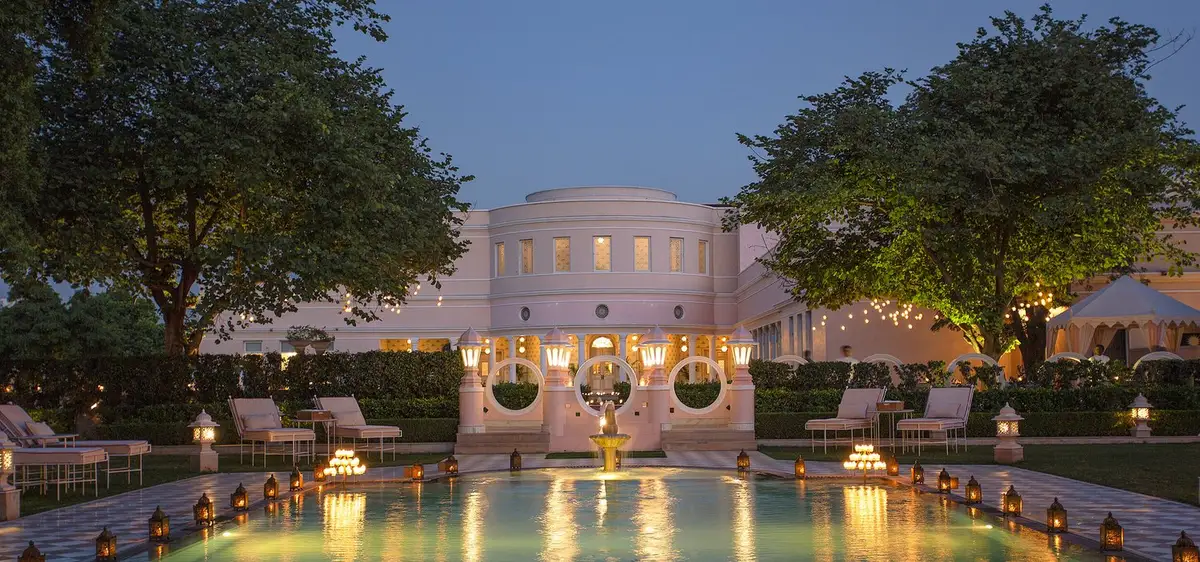
More intimate in character, Suján Rajmahal Palace offers an elegant interpretation of Jaipur’s aristocratic heritage.
Its distinctive interiors, personal scale and carefully curated atmosphere create a sense of staying within a private royal residence rather than a conventional hotel.
Samode Haveli
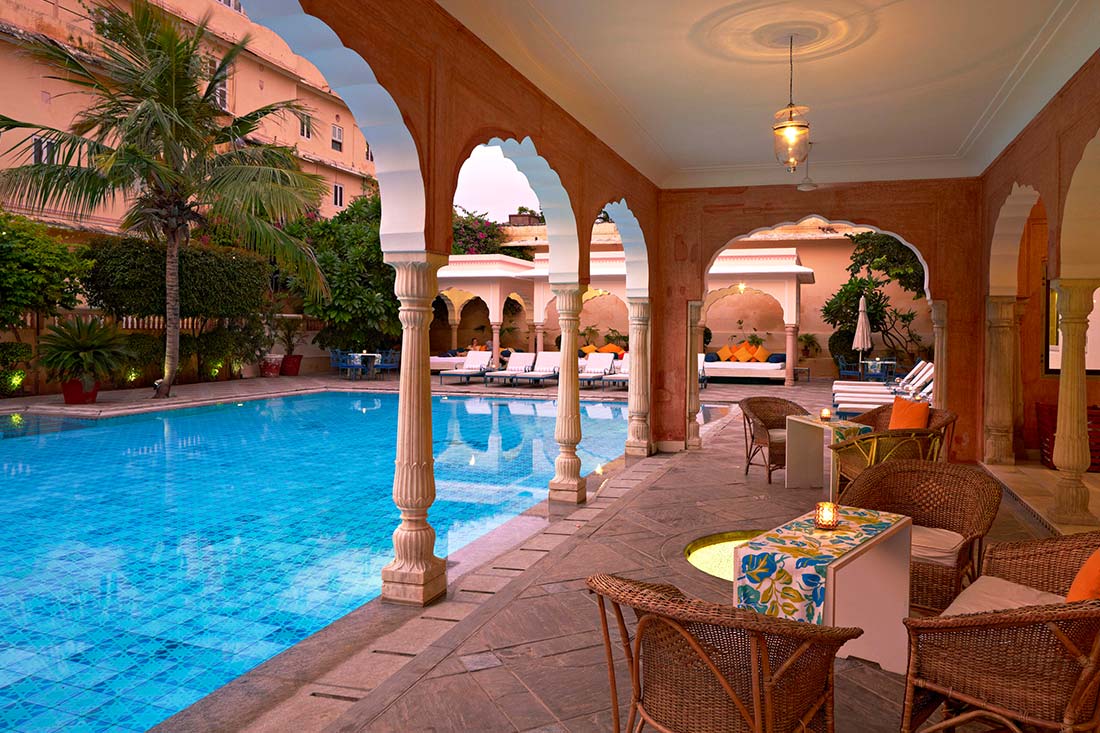
Hidden within the historic fabric of the old city, Samode Haveli brings together traditional architecture, intimate courtyards and the understated elegance of a heritage residence.
It offers a more secluded expression of Jaipur’s historic character.
The Taste of Royal Rajasthan
A Culinary Journey Through Jaipur
Jaipur’s culinary identity is inseparable from Rajasthan’s landscape.
Historically shaped by scarcity of water, desert conditions and royal kitchens, the cuisine developed remarkable depth from a relatively restrained collection of ingredients.
Dal baati churma remains one of the region’s most recognisable dishes.
Laal maas introduces a more intense side of Rajasthani cooking.
Gatte ki sabzi, ker sangri and traditional breads reveal the ingenuity of a cuisine shaped by its environment.
But Jaipur’s contemporary dining scene tells another story.
Modern chefs reinterpret regional recipes. Heritage properties transform traditional dishes into refined dining experiences. Private dining settings allow travellers to experience Rajasthan’s flavours within palatial surroundings.
For Luminara, food is never simply another inclusion in an itinerary.
It is part of understanding a place.
Jaipur Through the Seasons
Winter — The Golden Season
From October through March, Jaipur is at its most inviting.
Mornings are crisp, afternoons are comfortable and evenings carry a gentle coolness.
This is an ideal period for exploring forts, walking through the old city and enjoying long outdoor lunches or private dinners.
The winter months also bring Jaipur’s cultural calendar to life, adding another layer to the city’s atmosphere.
Spring — Jaipur in Softer Light
As winter fades, Jaipur begins to warm.
The landscape retains its beauty while the city becomes slightly quieter.
For travellers who prefer a more intimate rhythm, spring can offer an appealing balance between comfortable exploration and fewer crowds.
Summer — Jaipur Under a Fiercer Sun
Summer transforms Jaipur.
The days become intensely warm, but the city develops a different rhythm.
Early morning excursions, leisurely afternoons in beautifully appointed interiors and evenings beneath open skies create a slower, more private way to experience Rajasthan.
Luxury during this season is about thoughtful pacing.
Monsoon — A Different Rajasthan
Rain brings an unexpected softness to the desert landscape.
The surrounding hills become greener, the atmosphere becomes more dramatic, and the stone architecture takes on deeper tones.
Jaipur during the monsoon is less about ticking off landmarks and more about allowing the city to unfold slowly.
Beyond Jaipur
The Beginning of a Larger Rajasthan
Jaipur can stand alone as a destination, but its greatest strength may be the way it connects with the wider world of Rajasthan.
From Jaipur, a journey can continue towards the lakes of Udaipur, the blue streets of Jodhpur, the golden landscapes of Jaisalmer, the wilderness of Ranthambore or the heritage of Pushkar.
Each destination reveals another facet of Rajasthan.
Together, they create a journey that moves from royal courts to desert horizons, from wildlife sanctuaries to ancient temples and from historic cities to secluded palace retreats.
Luminara Voyages can design these journeys around the traveller rather than around a fixed itinerary—allowing Jaipur to become the opening chapter of a much larger Rajasthan experience.
The Luminara Perspective
Jaipur, Experienced Differently
A Jaipur Tour should never feel like a sequence of monuments connected by a vehicle.
It should have rhythm.
Morning light at Amber.
The quiet geometry of the City Palace.
The delicate facade of Hawa Mahal.
An afternoon discovering craftsmanship hidden within the old city.
A pause beside the waters of Man Sagar.
Sunset from the Aravallis.
Dinner beneath the architecture of a palace.
And finally, a quiet night where the noise of Jaipur fades into the distance.
At Luminara Voyages, we believe luxury is not defined simply by where you stay.
It is defined by how the destination makes you feel.
Our journeys are thoughtfully designed around private experiences, exceptional hospitality, distinctive accommodations and the details that transform travel into something deeply personal.
Jaipur is not merely a city to visit.
It is a city to enter slowly.
To observe.
To taste.
To listen.
And, eventually, to remember.
Your Jaipur, Curated by Luminara
There is no single way to experience Jaipur.
Perhaps yours begins beneath the rose-coloured facades of the old city.
Perhaps it begins with a private morning inside Amber Fort before the city fully awakens.
Perhaps it is an evening beneath palace arches, followed by dinner under a sky filled with Rajasthan’s stars.
Or perhaps Jaipur is simply the first chapter of a longer journey across the royal heart of India.
Whatever shape your journey takes, Luminara Voyages brings together the destination, the details and the experiences that make it uniquely yours.
Come to Jaipur not simply to see Rajasthan, but to experience the royal soul that still moves quietly through it.
Luminara Voyages
Curated Luxury Journeys Across India
Your Rajasthan story begins here.